PRODUCT
‹
›
‹
›
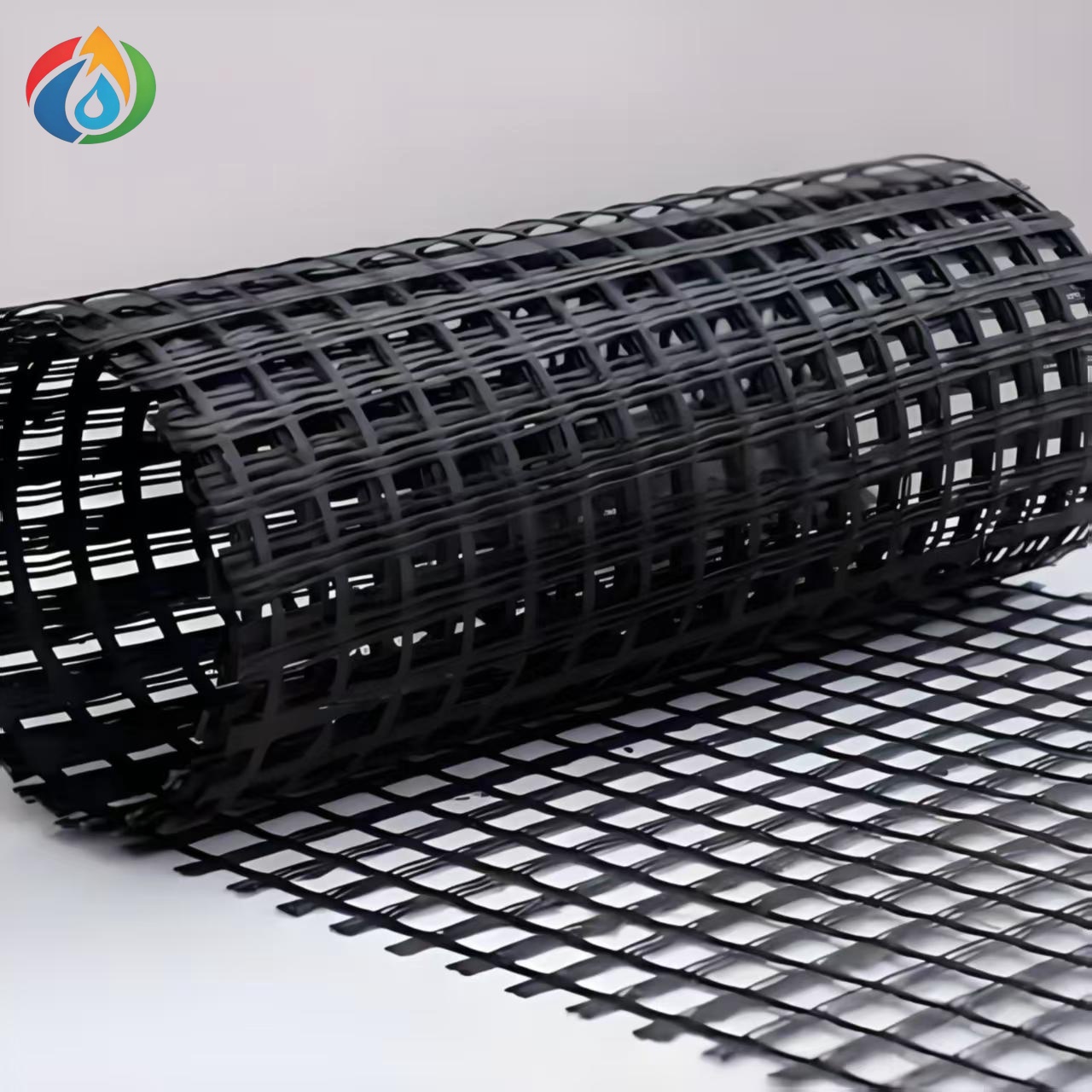
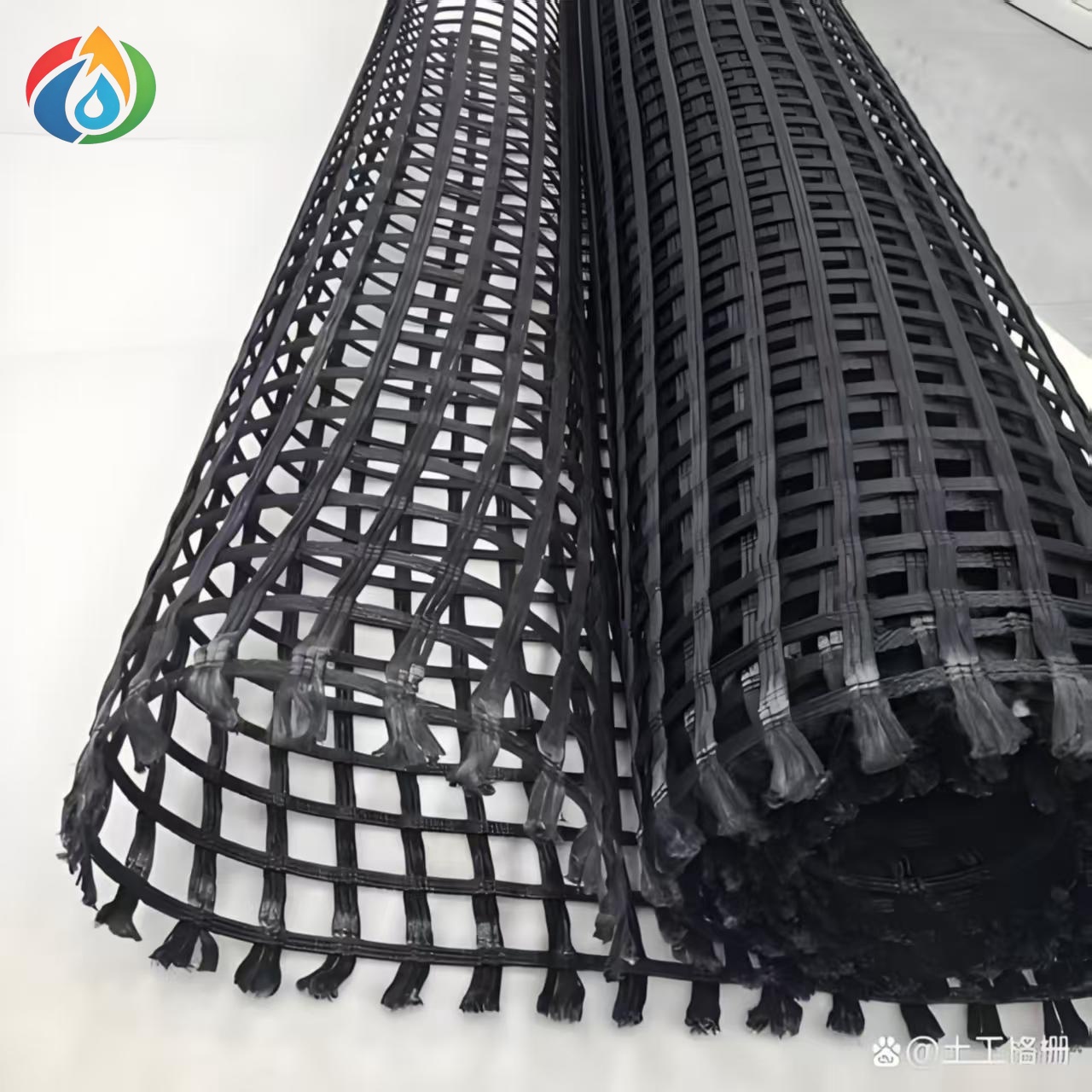
Product Description
I. Core Structure and Materials
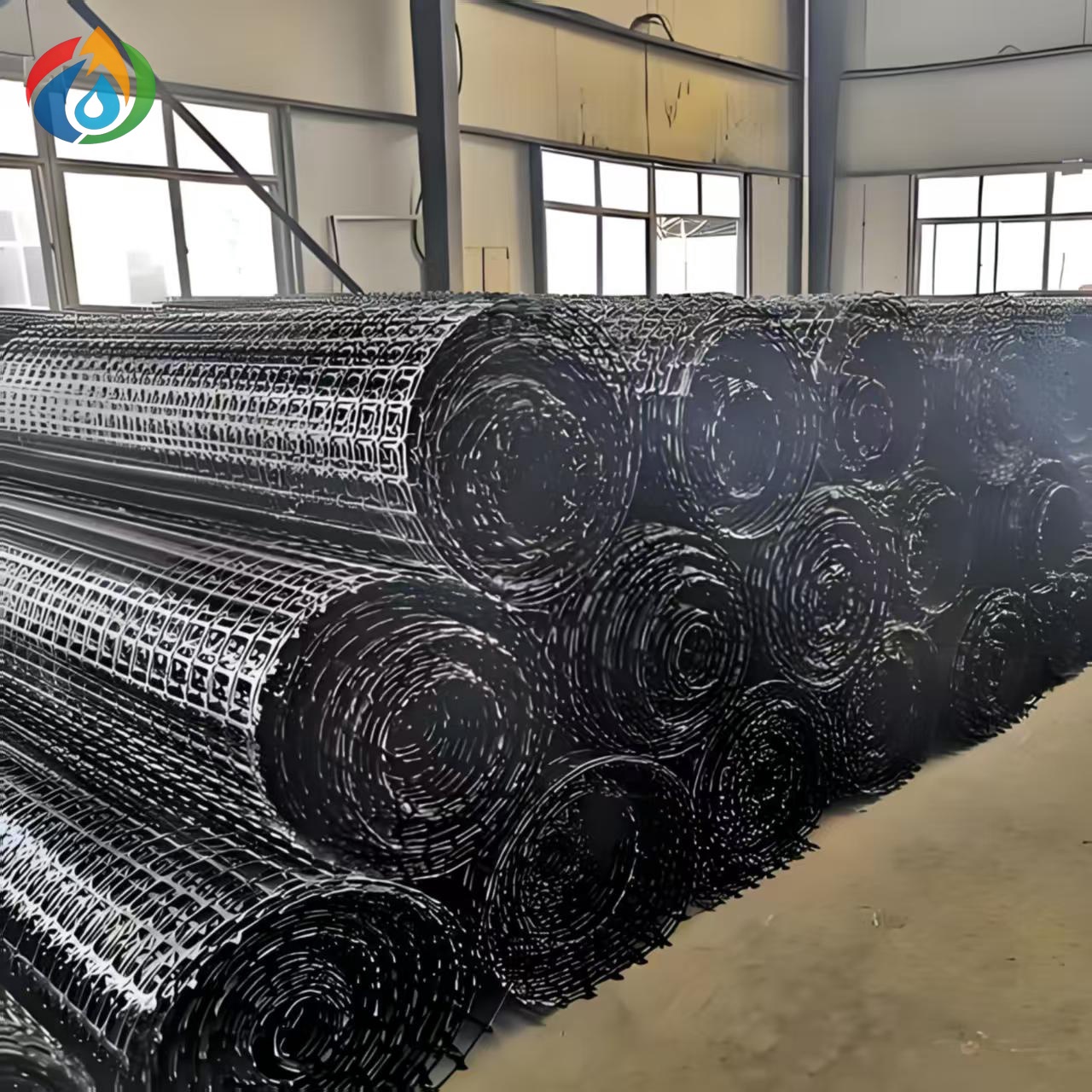
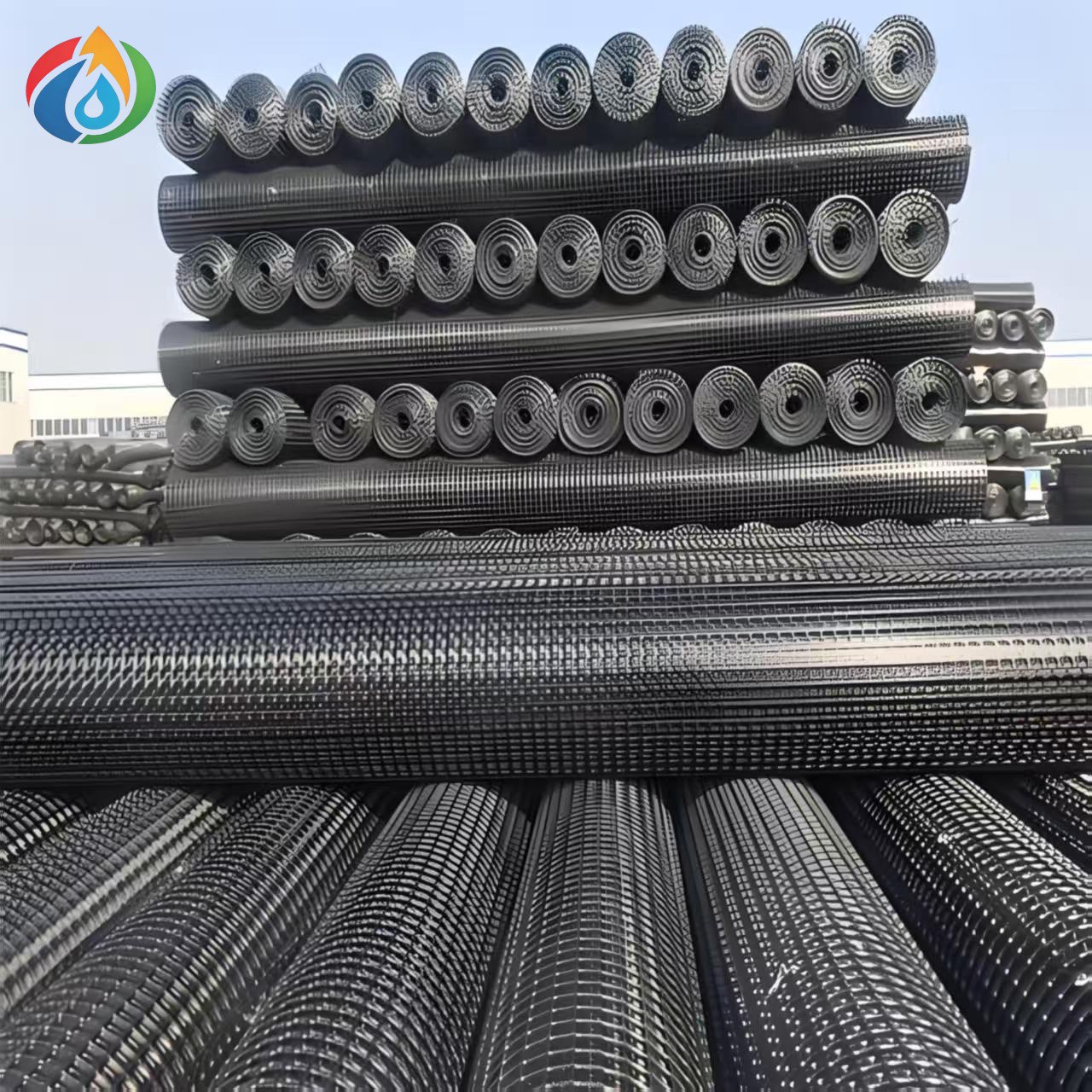
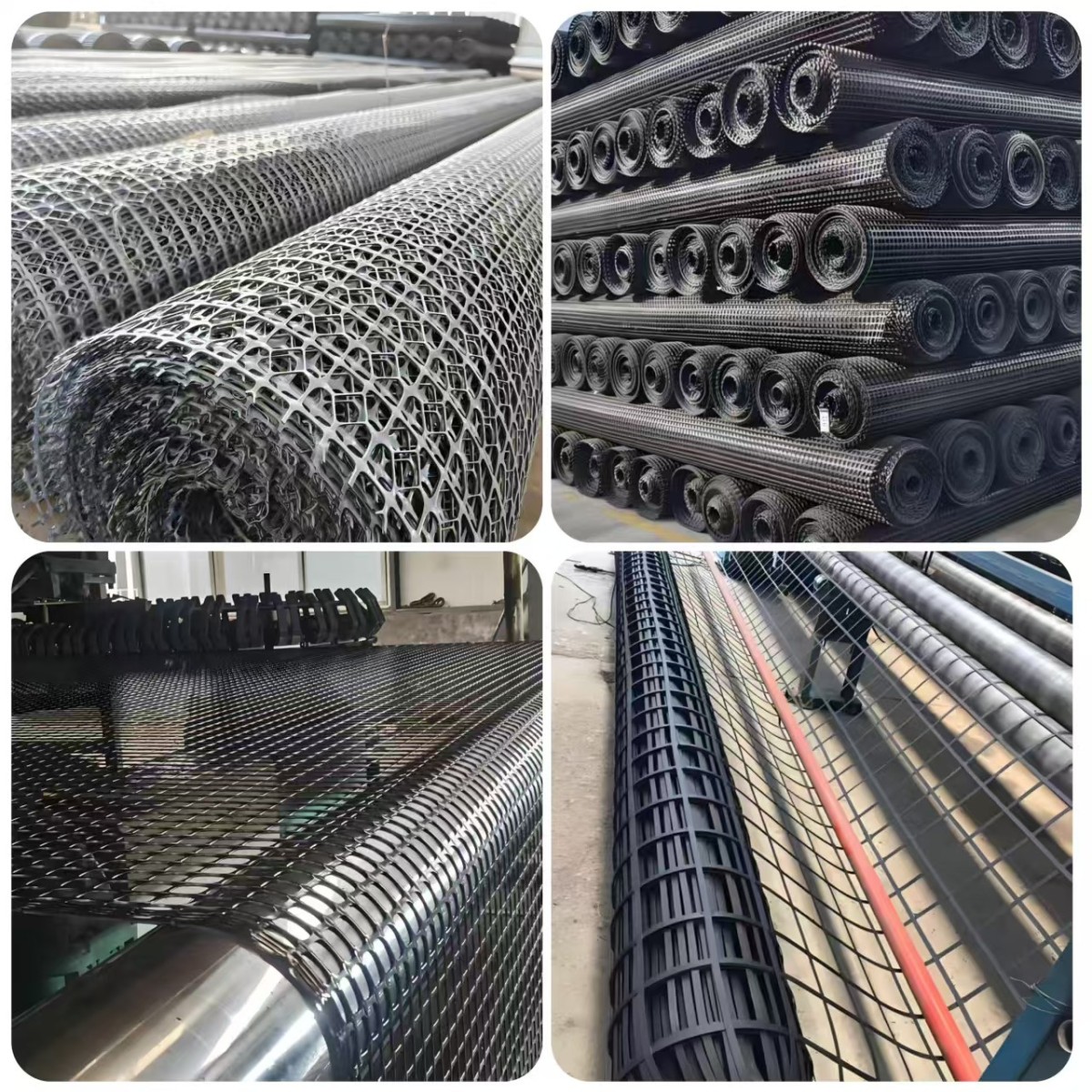
Fiberglass Geogrid: Made of high-strength, alkali-free glass fiber, it is manufactured into a mesh substrate using advanced warp knitting technology, and then coated to form a semi-rigid product. It possesses high tensile strength in both longitudinal and transverse directions, low elongation, high elastic modulus, and excellent resistance to high and low temperatures.
Warp-knitted Polyester Geogrid: Made from high-strength polyester industrial filaments, it is warp-knitted into a directional mesh fabric, and then coated with PVC. The warp and weft yarns are bound together at their intersections by high-strength fiber filaments, resulting in a stable structure.
Plastic Geogrid: Made from high-molecular polymers such as polypropylene and polyethylene, it is stretched and molded, available in uniaxial and biaxial stretching types, and possesses excellent creep resistance and aging resistance.
II. Specifications (Mainstream)
Item | Parameter Range
Tensile Strength | 20KN/m ~ 100KN/m (Longitudinal/Transverse)
Elongation | ≤10%
Mesh Size | 25mm×25mm ~ 66mm×66mm
Width | 1m ~ 6m
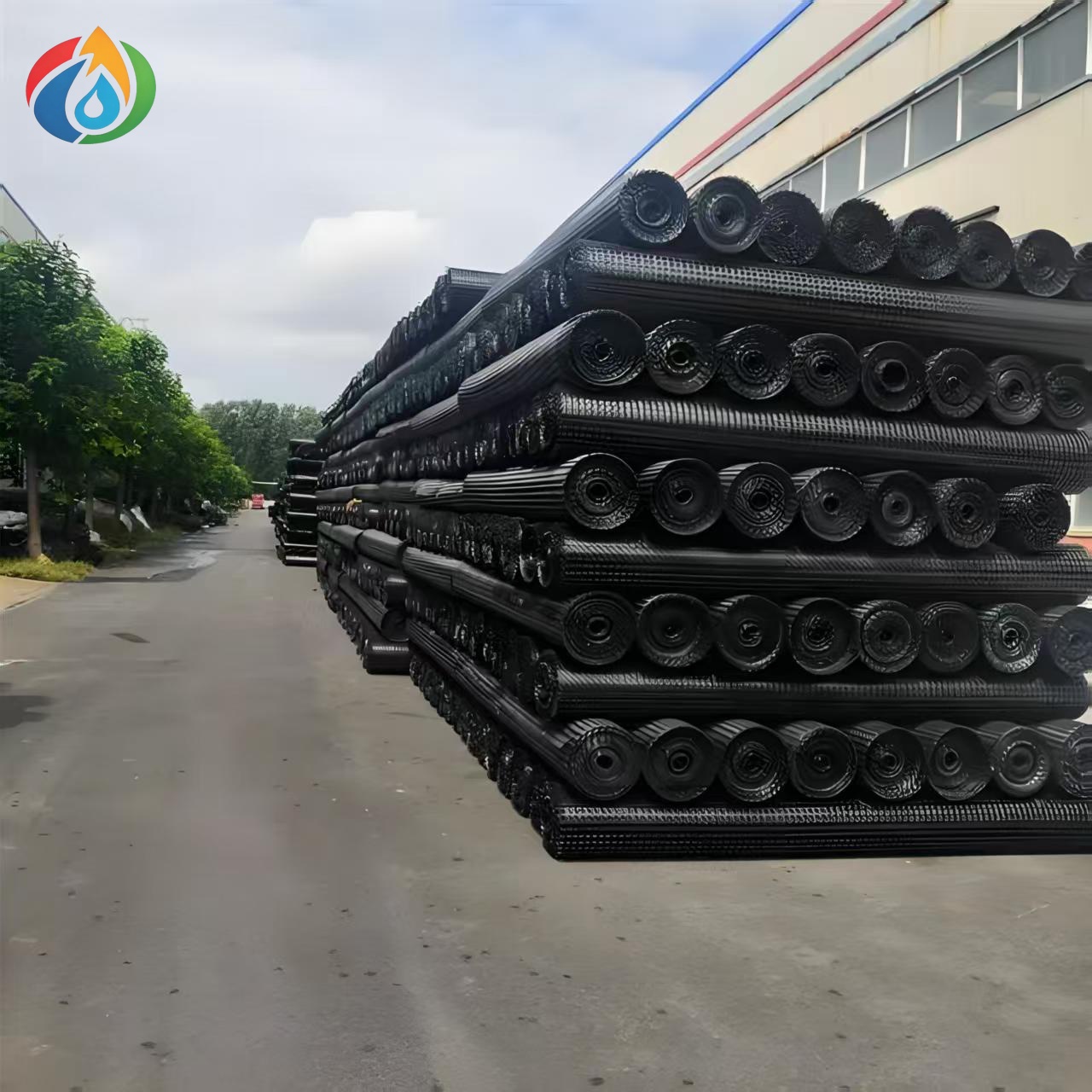
Roll Length | 50m ~ 100m
Surface Treatment | PVC impregnation, asphalt coating, etc.
III. Core Advantages (Compared to Traditional Reinforcement Solutions)
Extremely High Tensile Strength: High tensile strength in both warp and weft directions, large modulus, effectively dispersing load stress and significantly improving foundation bearing capacity.
Low Deformation and Creep: Extremely low elongation (≤10%), not easily deformed over long-term use, and good structural stability.
Strong Interlocking Effect: The grid structure allows soil, gravel, and other fillers to be embedded within, significantly increasing the coefficient of friction (up to 0.8~1.0) and providing strong pull-out resistance.
Convenient and Efficient Construction: Lightweight and flexible, easy to cut and connect on-site, allowing for overlapping and requiring no special construction machinery.
Excellent Weather Resistance and Durability: Resistant to high temperatures, low temperatures, aging, acids, alkalis, and corrosion, adaptable to various harsh environments.
Economical and Environmentally Friendly: Effectively reduces project costs, extends project lifespan, and reduces maintenance costs.
IV. Applicable Scenarios
Road Engineering: Asphalt pavement and cement concrete pavement reinforcement, old road repair, prevention of reflective cracking
Railway Engineering: Railway ballast protection, railway retaining wall reinforcement, bridge abutment foundation stabilization
Water Conservancy Engineering: Embankment slope protection, water conservancy project reinforcement
Foundation Treatment: Soft soil foundation reinforcement, roadbed reinforcement, reinforced soil retaining walls and slopes
Other Fields: Airport runways, desertification control, municipal roads, etc.
V. Construction Key Points
Substrate Preparation: Level and clean the existing road surface or foundation, removing debris and sharp objects.
Geogrid Installation: Lay the geogrid smoothly on the base layer, with an overlap width of ≥5cm laterally and ≥10cm longitudinally.
Fixing and Anchoring: Ordinary geogrids require fixing with steel nails; self-adhesive geogrids can be further constructed after compaction.
Covering and Compaction: Lay asphalt mixture or filler, and compact it moderately with a road roller.
VI. Selection Recommendations
By Material: Fiberglass geogrids are suitable for pavement reinforcement and preventing reflective cracking; polyester geogrids are suitable for soft soil reinforcement and retaining wall reinforcement; plastic geogrids are suitable for long-term projects requiring creep resistance.
By Strength: 20-40 KN/m specifications are generally suitable for roadbed reinforcement; for heavy-load roads, bridge abutments, and other projects, high-strength specifications of 50 KN/m or higher are recommended.
By Width: Select widths of 1-6m according to the construction area to reduce overlaps and improve construction efficiency.
Product Show
Project Case Studies
Hydraulic Engineering
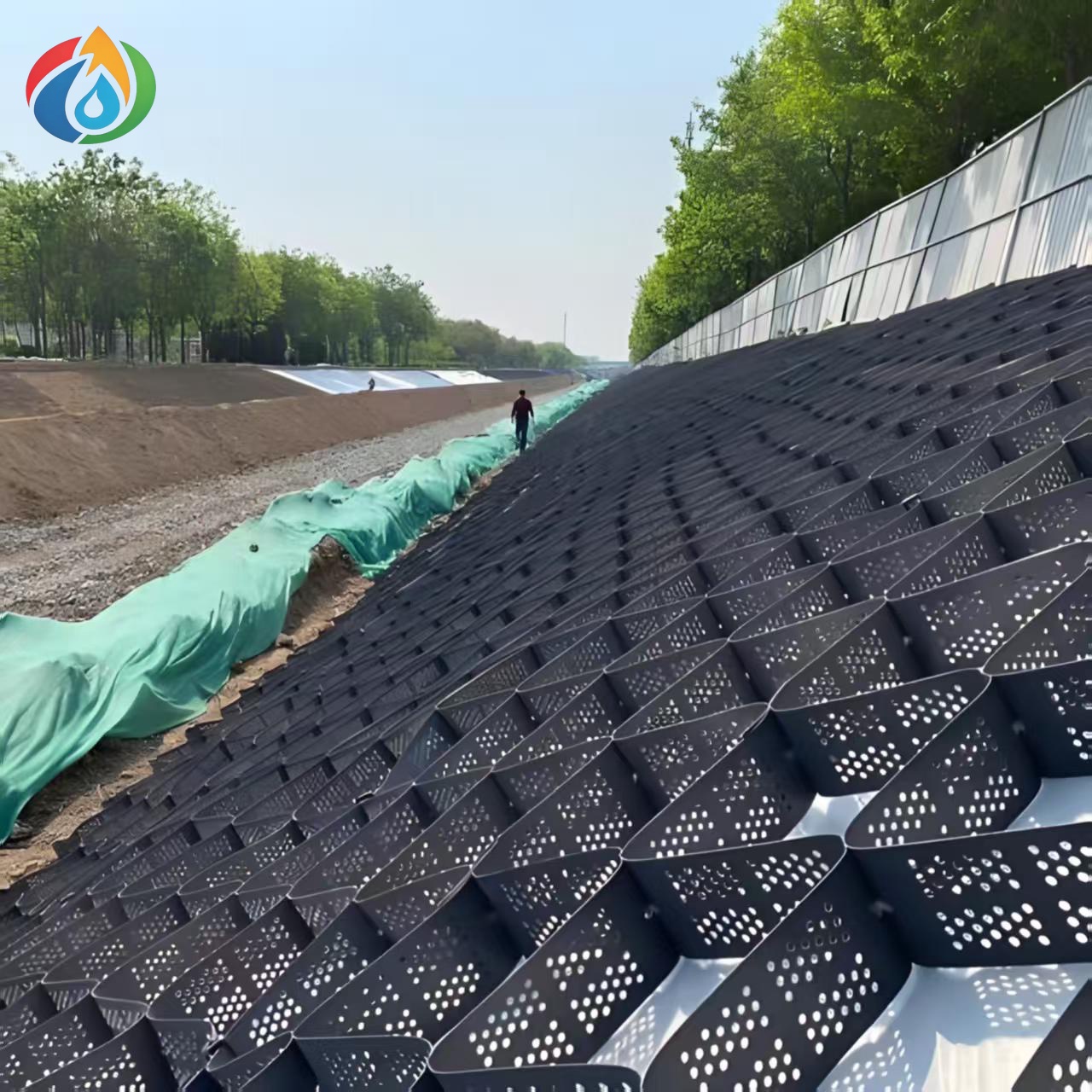
Riverbank Slope Protection Project
Riverbank Slope Protection Project
Hydraulic Engineering
Artificial Lake Anti-Seepage Project
Artificial Lake Anti-Seepage Project
Salt Field Drying
Project Case Studies
Project Case Studies
Landfilling
Landfill Liner Systems
Landfill Liner Systems
Waste Landfilling
Solid Waste Landfill Project
Solid Waste Landfill Project
Launch Your High-Efficiency Anti-Seepage Solution
Our team of experts will provide you with a customized quotation and technical recommendations within 24 hours.
Related Products
 PVC GeomembraneStandardized ManufacturingScalable and Reliable DeliveryLearn More >
 EVA/ECB Waterproof MembraneStandardized ManufacturingScalable and Reliable DeliveryLearn More >
 Composite GeomembraneStandardized ManufacturingScalable and Reliable DeliveryLearn More >
 Short Fiber GeotextileStandardized ManufacturingScalable and Reliable DeliveryLearn More >
 Long-Filament GeotextileStandardized ManufacturingScalable and Reliable DeliveryLearn More >
 Eco BagStandardized ManufacturingScalable and Reliable DeliveryLearn More >
 Gabion BagStandardized ManufacturingScalable and Reliable DeliveryLearn More >
 Concrete BlanketStandardized ManufacturingScalable and Reliable DeliveryLearn More >
-(2)-(1)") Geogrid-(1)-(2)-(1)Standardized ManufacturingScalable and Reliable DeliveryLearn More >
Geogrid-(1)-(2)-(1)Standardized ManufacturingScalable and Reliable DeliveryLearn More > GeogridStandardized ManufacturingScalable and Reliable DeliveryLearn More >
 GeogridStandardized ManufacturingScalable and Reliable DeliveryLearn More >
 GeogridStandardized ManufacturingScalable and Reliable DeliveryLearn More >
 GeogridStandardized ManufacturingScalable and Reliable DeliveryLearn More >
 GeogridStandardized ManufacturingScalable and Reliable DeliveryLearn More >
 GeocellStandardized ManufacturingScalable and Reliable DeliveryLearn More >
 GeocellStandardized ManufacturingScalable and Reliable DeliveryLearn More >
 GeocellStandardized ManufacturingScalable and Reliable DeliveryLearn More >
 GeocellStandardized ManufacturingScalable and Reliable DeliveryLearn More >
 GeocellStandardized ManufacturingScalable and Reliable DeliveryLearn More >
 GeocellStandardized ManufacturingScalable and Reliable DeliveryLearn More >
 PVC GeomembraneStandardized ManufacturingScalable and Reliable DeliveryLearn More >
 PVC GeomembraneStandardized ManufacturingScalable and Reliable DeliveryLearn More >
 PVC GeomembraneStandardized ManufacturingScalable and Reliable DeliveryLearn More >
 PVC GeomembraneStandardized ManufacturingScalable and Reliable DeliveryLearn More >
 EVA/ECB Waterproof MembraneStandardized ManufacturingScalable and Reliable DeliveryLearn More >
 EVA/ECB Waterproof MembraneStandardized ManufacturingScalable and Reliable DeliveryLearn More >
 EVA/ECB Waterproof MembraneStandardized ManufacturingScalable and Reliable DeliveryLearn More >
 EVA/ECB Waterproof MembraneStandardized ManufacturingScalable and Reliable DeliveryLearn More >
 EVA/ECB Waterproof MembraneStandardized ManufacturingScalable and Reliable DeliveryLearn More >
 Composite GeomembraneStandardized ManufacturingScalable and Reliable DeliveryLearn More >
 Short Fiber GeotextileStandardized ManufacturingScalable and Reliable DeliveryLearn More >
 Short Fiber GeotextileStandardized ManufacturingScalable and Reliable DeliveryLearn More >
 Short Fiber GeotextileStandardized ManufacturingScalable and Reliable DeliveryLearn More >
 Long-Filament GeotextileStandardized ManufacturingScalable and Reliable DeliveryLearn More >
") Long-Filament Geotextile-(3)Standardized ManufacturingScalable and Reliable DeliveryLearn More >
Long-Filament Geotextile-(3)Standardized ManufacturingScalable and Reliable DeliveryLearn More > Long-Filament GeotextileStandardized ManufacturingScalable and Reliable DeliveryLearn More >
 Long-Filament GeotextileStandardized ManufacturingScalable and Reliable DeliveryLearn More >
 Eco BagStandardized ManufacturingScalable and Reliable DeliveryLearn More >
 Eco BagStandardized ManufacturingScalable and Reliable DeliveryLearn More >
Leave A Message
If you are interested in our products and want to know more details, please leave a message here, we will reply you as soon as we can.