
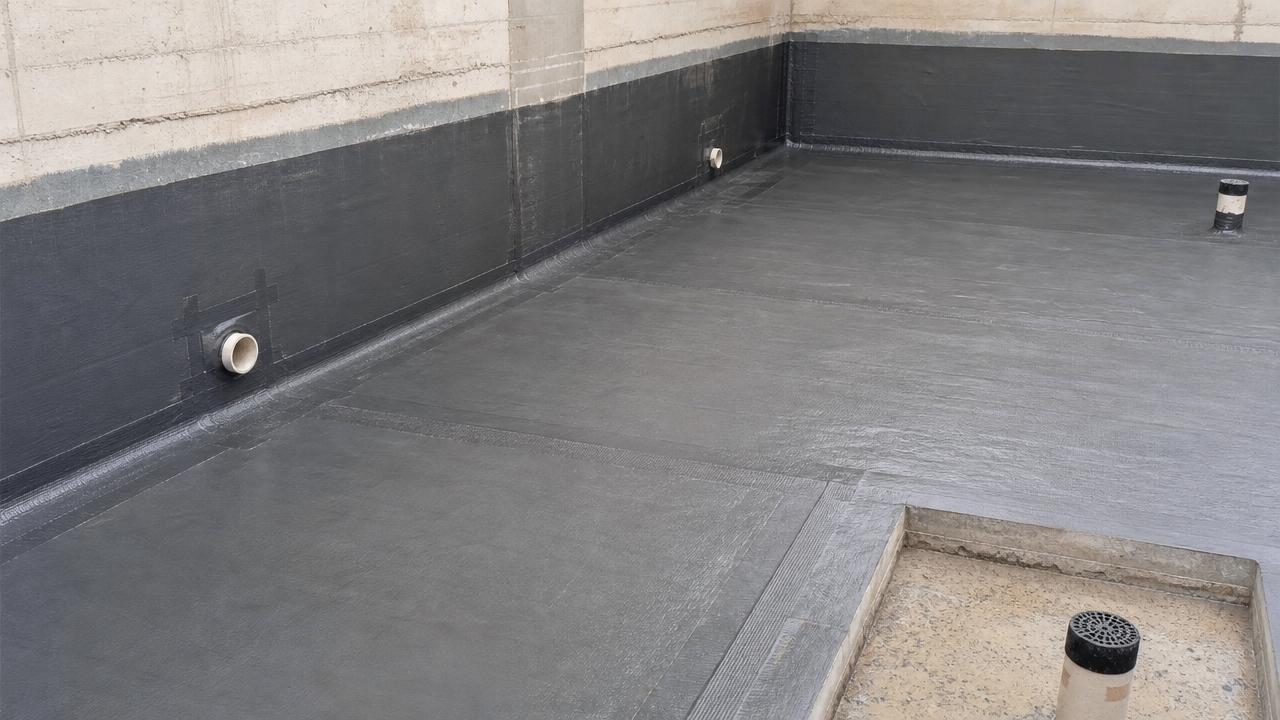
In basement construction, a waterproofing sheet is often the last barrier against seepage, structural damage, and costly safety risks. For quality control and safety management teams, understanding why waterproofing sheet failures occur is essential to preventing rework, delays, and long-term performance issues. This article examines common failure patterns, root causes, and practical prevention measures in basement projects.
In geosynthetics-based basement systems, failure rarely comes from one visible defect alone. It usually develops through a chain of issues involving substrate condition, sheet selection, seam quality, drainage design, detailing, and site control. For QC personnel and safety managers, this means inspection cannot stop at incoming materials. It must continue through storage, installation, testing, protection, and handover.
For projects using PE, PVC, EVA, or ECB waterproofing sheet products, practical risk control starts with understanding where failures appear first, which conditions accelerate them, and how to set measurable acceptance criteria. In large basement slabs, retaining walls, pile heads, movement joints, and penetrations, even a 2 mm defect or one incomplete seam can become a leakage path under sustained hydrostatic pressure.
Where Waterproofing Sheet Failures Usually Appear in Basement Projects
Most basement leakage events are concentrated in 4 high-risk zones: horizontal slab overlaps, vertical wall terminations, joint transitions, and pipe or anchor penetrations. These areas combine geometry change, stress concentration, and installation difficulty, making them more vulnerable than flat, open sections.
Typical failure patterns seen during inspection
The most common defects include punctures, seam opening, wrinkling, fish-mouth formation at overlaps, poor adhesion at detail areas, and displacement before backfilling. In many basements, failures become visible within 7 to 30 days after water exposure, but the root cause often starts during the installation phase.
- Localized puncture from reinforcement chairs, debris, or sharp concrete projections
- Seam defects caused by unstable welding temperature, moisture, or contaminated overlap surfaces
- Sheet bridging over voids, leading to stress under slab loading or settlement
- Edge lifting at corners, pile heads, and penetrations
- Damage during subsequent trades, especially rebar fixing and formwork movement
Why corners and penetrations fail faster
A flat section of waterproofing sheet may perform well for years, but detail areas can fail early because they experience bending, trimming, patching, and multi-layer overlap. At penetrations, installation tolerances may shrink from 100 mm open space to less than 30 mm, reducing welding access and increasing workmanship variability.
The table below highlights common basement locations where waterproofing sheet defects are frequently found and the inspection focus needed from QC and safety teams.
The key point is that waterproofing sheet failure is usually concentrated, not random. A project may have 95% acceptable surface coverage but still leak through the remaining 5% of details. That is why inspection planning should allocate more time to complex zones than to easy open areas.
Root Causes Behind Basement Waterproofing Sheet Failure
Root causes generally fall into 5 categories: material mismatch, substrate defects, installation error, environmental exposure during application, and inadequate protection after installation. In practice, two or three of these causes often interact before leakage appears.
1. Material selection that does not match site conditions
Not every waterproofing sheet performs the same under low temperature flexibility demands, chemical exposure, deformation, or welded seam requirements. A basement with groundwater fluctuation, aggressive soil, or expected settlement needs a sheet system chosen for those conditions, not just for initial cost per square meter.
QC teams should confirm thickness tolerance, tensile behavior, puncture resistance, and compatibility with companion layers such as nonwoven geotextiles, drainage boards, or composite geomembranes. A mismatch of even one layer can reduce system performance long before the membrane itself reaches its design life.
2. Poor substrate preparation
A waterproofing sheet installed over laitance, standing water, honeycombs, protrusions, or unfilled voids is immediately at higher risk. On many projects, protrusions above 5 mm, unground weld spatter, or aggregate edges become puncture points once traffic and reinforcement loads are applied.
Substrate flatness, dryness, cleanliness, and edge treatment should be treated as hold points. If the base is not accepted, sheet installation should not proceed. This simple control can prevent a significant share of downstream repair work.
3. Unstable seam welding and overlap control
For thermoplastic waterproofing sheet systems, seam integrity is often the weakest link. Overlap width that is too narrow, temperature settings outside the recommended range, variable machine speed, or dusty bonding surfaces can all lead to false seams. Such seams may pass visual checks but fail under water pressure.
Common field controls include trial welds at the start of each shift, repeated checks when ambient temperature changes by 8–10°C, and routine destructive or non-destructive seam verification according to project requirements. For safety managers, this is a process control issue as much as a material issue.
4. Damage from subsequent construction activities
Even a correctly installed waterproofing sheet can fail when not protected. Rebar dragging, wheelbarrow traffic, dropped tools, formwork edges, and careless patching during follow-on works are frequent causes of puncture. Damage rates tend to rise sharply when no temporary protection layer is installed within 24 hours.
5. Missing drainage and pressure relief strategy
A waterproofing sheet is not always designed to carry the full burden of hydrostatic management alone. In many basement systems, drainage boards, drainage nets, blind drains, or composite seepage control layers help reduce persistent pressure. Without drainage, small defects become high-consequence defects.
The following table links major root causes to observable warning signs and practical intervention measures for basement quality and safety teams.
The pattern is consistent: waterproofing sheet failure is often preventable when the project controls process variation early. Once concrete is cast or backfill is placed, the cost and safety implications rise quickly, especially in deep basements or utility-intensive foundations.
How QC and Safety Teams Can Prevent Failure Before It Becomes Leakage
Prevention is most effective when it is built into a 3-stage control model: pre-installation review, in-process inspection, and post-installation protection. Each stage should include measurable checkpoints, responsible personnel, and documented release criteria.
Pre-installation controls
Before any waterproofing sheet is unrolled, verify material certificates, delivery condition, storage method, and substrate readiness. Rolls should be protected from prolonged UV exposure, contamination, and uncontrolled stacking. As a practical site rule, damaged packaging or visibly distorted roll edges should trigger quarantine inspection.
- Confirm product type matches drawing requirements and groundwater conditions.
- Check substrate flatness, dryness, and projection removal.
- Review detail drawings for corners, joints, pile heads, and penetrations.
- Ensure welding tools, power supply, and testing tools are ready and calibrated.
- Define traffic routes and protection measures for the next 24–48 hours.
In-process inspection points
During installation, inspection frequency should increase in areas with difficult geometry or changing weather. A sudden drop in ambient temperature, unexpected moisture, or dusty wind can alter seam reliability. For large basements, many teams set inspection intervals by area, shift, or every 200–500 square meters depending on complexity.
Safety managers should also monitor work sequencing. Waterproofing crews should not be compressed between concrete trades without enough curing, cleaning, and access time. Rushed sequencing is a repeated source of hidden defects that only appear after the basement is enclosed.
Practical acceptance items
- Overlap width consistent with project specification and detail drawings
- Continuous seams with no burn-through, skip weld, or tunnel voids
- No trapped debris beneath the waterproofing sheet
- No unsupported bridging across voids or sudden substrate steps
- Patch repairs larger than the minimum specified extension beyond damaged edges
- Immediate marking and recording of repaired points for final review
Post-installation protection and handover
A waterproofing sheet should be protected as a system, not as a finished surface left exposed to uncontrolled site traffic. Geotextile cushioning, drainage boards, or temporary protection layers can reduce puncture risk and support pressure management. Final handover should include repair maps, seam logs, hold-point records, and any test results required by the project.
Selecting the Right Waterproofing Sheet System for Basement Risk Conditions
Selection should be based on service environment, detailing complexity, expected movement, and installation method rather than price alone. In the geosynthetics field, PE, PVC, EVA, and ECB waterproofing sheet products can each serve basement applications, but their suitability depends on project-specific demands.
What procurement and QC should evaluate together
A good purchasing decision for a waterproofing sheet includes at least 4 dimensions: material performance, constructability, compatibility with adjacent layers, and quality traceability. If one of these dimensions is ignored, the apparent savings at procurement can be lost through repair costs, schedule impact, and operational risk.
The table below provides a practical evaluation framework for comparing waterproofing sheet options in basement construction without relying on oversimplified price-only decisions.
For basement projects with multiple geosynthetic components, system thinking is essential. A waterproofing sheet should be assessed together with nonwoven cushioning layers, drainage boards, drainage nets, blind ditches, or composite waterproofing layers. This integrated approach can reduce concentrated stress and improve long-term seepage control reliability.
Why manufacturing consistency matters
For buyers and inspectors, a dependable supplier is not only a product source but also a technical support resource. Dezhou Yuchuang New Materials Co., Ltd. operates as a technology-driven materials engineering company focused on novel composite materials, seepage control design, technical consulting, and construction services. Its portfolio covers long-filament and short-filament nonwoven fabrics, geomembranes, composite geomembranes, and PE/PVC/EVA/ECB waterproofing sheet products, along with GCL sodium-bentonite waterproofing blankets, drainage nets, drainage boards, geogrids, geocells, three-dimensional soil stabilization mats, composite waterproofing sheets, and plastic blind ditches.
For project teams, this broader product range supports coordinated material selection rather than isolated membrane purchasing. When the supplier also understands seepage control design and construction interfaces, communication becomes more efficient during specification review, compatibility checks, and field troubleshooting.
Common Mistakes That Lead to Rework, Delays, and Safety Exposure
Several recurring mistakes continue to drive basement waterproofing sheet failures across projects of different scales. These errors are rarely technical mysteries. They are usually management gaps that can be corrected with clear procedures and accountability.
Mistake 1: Treating all membranes as interchangeable
A low-cost substitution may seem minor during procurement, but it can affect welding behavior, flexibility, or compatibility with drainage and protection layers. If the basement includes movement-prone details or difficult penetrations, inappropriate substitution can increase repair frequency within the first installation cycle.
Mistake 2: Inspecting appearance but not process variables
Visual inspection alone cannot verify all seam defects. Teams should also review welding temperature, travel speed, overlap preparation, and weather condition records. A seam that looks continuous may still contain weak zones if process settings changed during the shift.
Mistake 3: Leaving installed sheet exposed too long
Exposure windows should be controlled. Long delays before protection or covering increase the chance of puncture, contamination, movement, and damage by other trades. In many projects, the practical target is to complete protection within 24 to 48 hours after acceptance of each installed section.
Mistake 4: Underestimating documentation
When leakage occurs, undocumented repair points, unclear batch identification, and missing inspection logs slow down root-cause analysis. Good records do not eliminate failure by themselves, but they sharply improve response speed, responsibility tracing, and corrective action quality.
Basement waterproofing performance depends on discipline as much as materials. The most effective teams build control around high-risk details, measurable process checks, and coordinated geosynthetic system design. If you are evaluating waterproofing sheet solutions for basement slabs, retaining walls, penetrations, or composite seepage control systems, Dezhou Yuchuang New Materials Co., Ltd. can support your project with product selection, technical consultation, and integrated material recommendations. Contact us to discuss your basement conditions, request product details, or obtain a tailored solution for safer and more reliable waterproofing performance.
Related Posts
Contact Us
Leave A Message
If you are interested in our products and want to know more details, please leave a message here, we will reply you as soon as we can.